
“Kameoka City is surrounded by mountains and has a rich natural environment with rural scenery despite good access from Kyoto and Osaka. Beautiful green in the spring, autumn leaves in the fall, and the winter is surrounded by fog in Tamba. The Kameoka Fog Art Festival is fascinated by Kameoka as “Tokanaka” where you can meet such beautiful scenery of the four seasons, and together with many active artists, fosters the appeal of people and the local community.” Kameoka Kiri Art Cultivation
no-mu ’Micro Happening’ 2020
I was invited by artist Eikoh Tanaka to be part of the Artists in Residence Project “Micro Happening” at Artists’ Retreat no-mu, Kameoka, Japan.
I spent 6 weeks from January 17th to February 27th experiencing the rich landscape of Kameoka. Falling in love with the mountains and fog, the rivers and pine trees, the rice and vegetable fields, the sound of the Sagano train line, the pickled daikon and turnips, soba noodles, tempura and onigiri, temples and shrines, shoji sliding doors, Japanese green tea, slippers and tatami, the peace and quiet and the wonderful community of Kameoka.
My senses continued to be awakened as I immersed myself in this new and fascinating culture documenting my explorations through field recordings, photography, film and print. Overwhelmed by the generosity of the people of Kameoka I gained a rich insight to this remarkable place, making connections with so many welcoming, open hearted people which inspired this new piece of work ‘22 Views of Kameoka’. A reflection and celebration of place and people of Kameoka.
22 Views of Kameoka


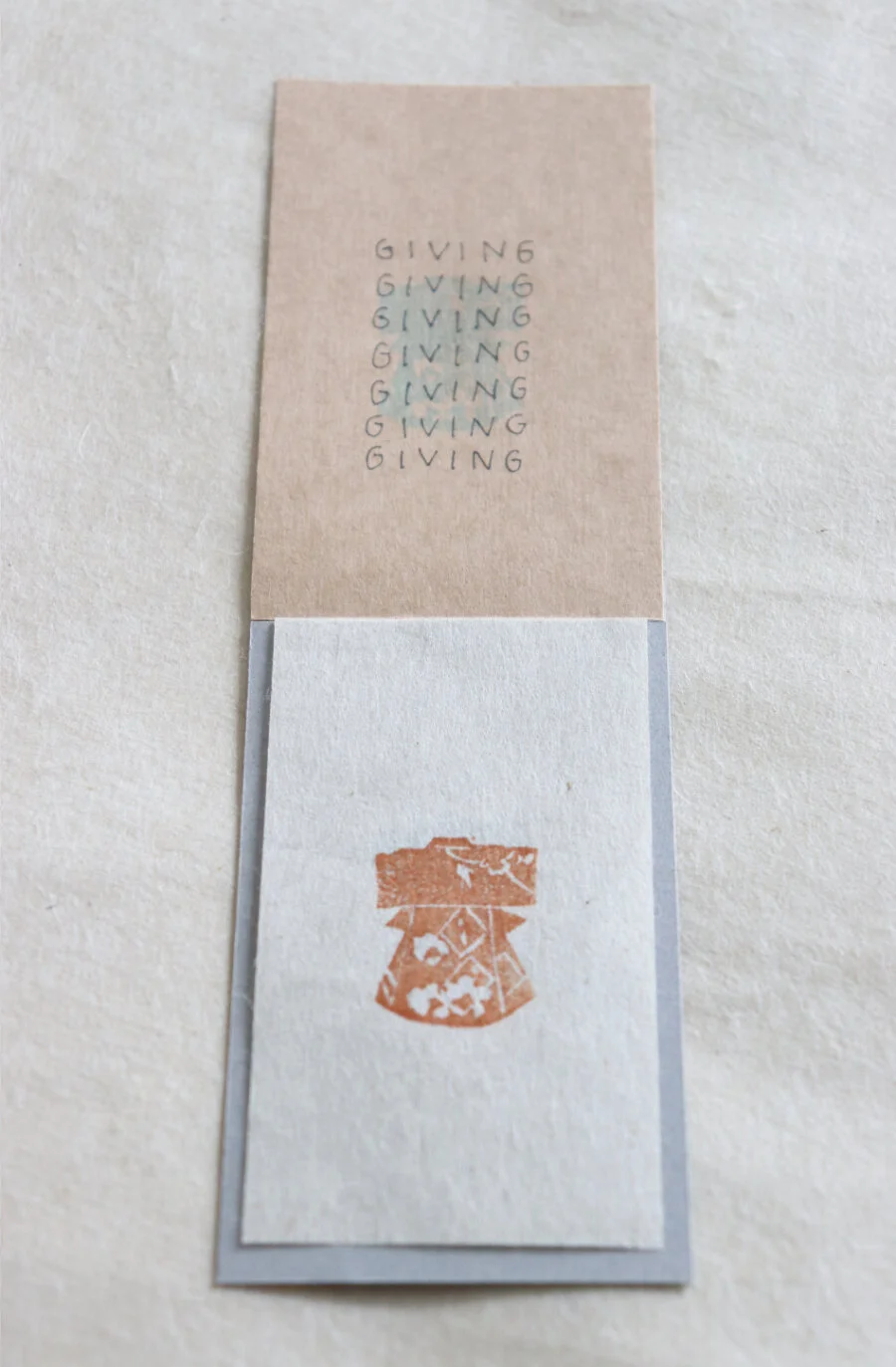


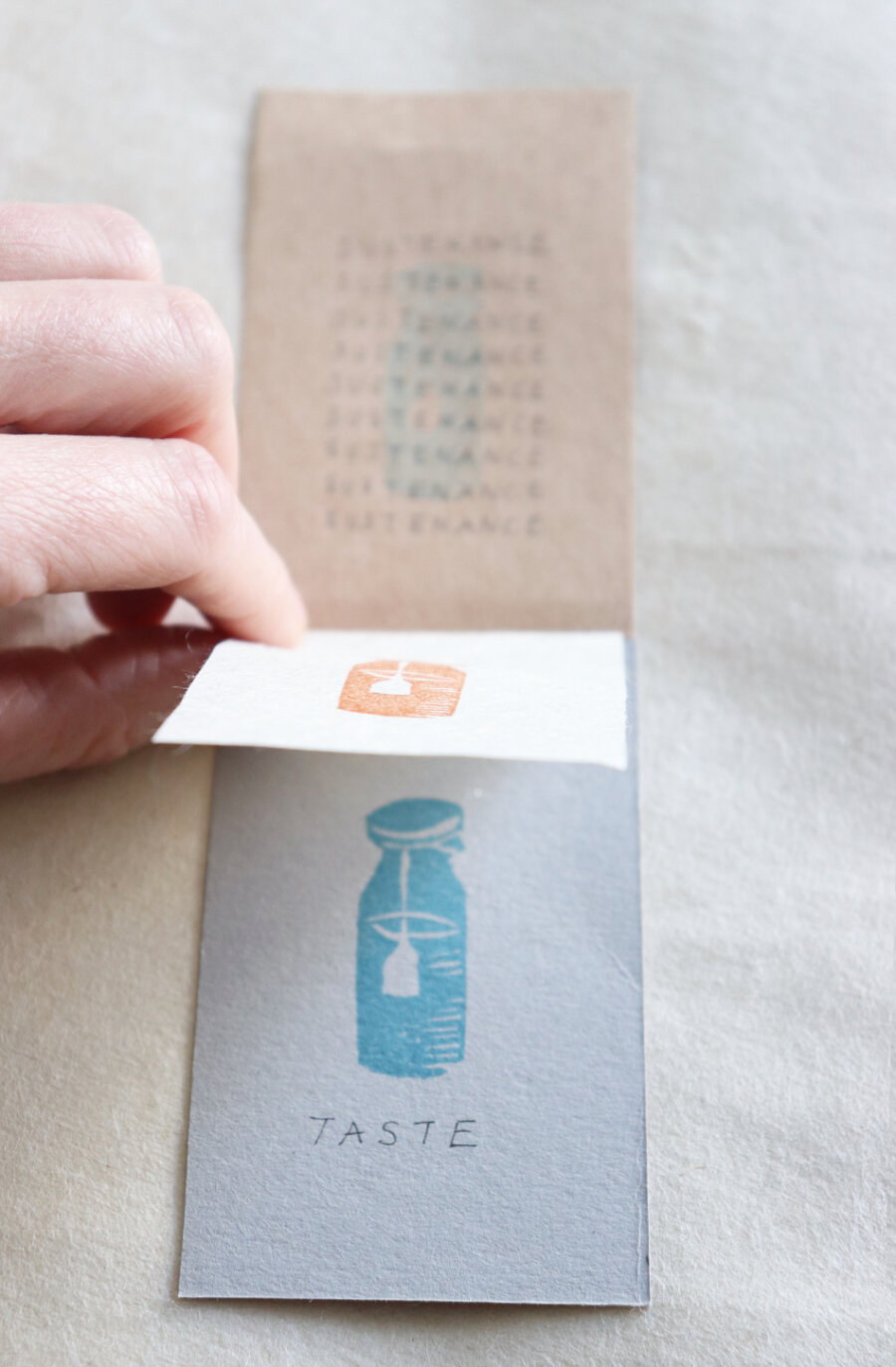


Materials: Mini-prints made from rubber stamps printed on recycled card from consumables during my stay in Kameoka, washi from Arashiyama, and kraft card from Kyoto city. Exhibited at Yugùe, Kyoto.
22 Views of Kameoka - cafe Yùgue

Thank you
Eikoh Tanaka, Kana Okanoya, Kouta Kameoka, Anna Namikawa, Elena Aframova, Julie Chovin, Alexandre Gailla, Akemi Shijyuku, Tomoko Tsukamoto, Yukari Yoshikawa, Yui Shimizu, Kotoe Shindo, Moegi Deguchi, Aki Makita, Sachiko Mochizuki, Cårrïe Ng, the chefs Hirotake Nagano and Yusaku Nishikawa, Hikaru Toyoda, Sachiko Toyoda, Julius Loewe, Kaori Yamane, Samuel Zeid, Felix Krienke, Alex Kerr, Hiroya Kawakami, Equili Brista musicians: Mitsugi Deguchi, Yasawa san, Yano san, Ohba Mitsuru, Azusa Okamoto, Keiichi Yoshikawa and Watanabe san.
Omoya house, Social Cuisine Sunday Gatherings at Omoya, Kiri (Fog) Festival, Kameoka Galleria events, festivals and Japanese lessons, Cafe Mimi, Coffee stand blackie, H District, Kamejin film, Saigen Temple, Kinku Temple, Kameoka Temples and Shrines, Hozugawa River, Kameoka Mountains, Sea of Clouds Terrace, Mayawaki bookshop, Rice and Vegetable fields, Oi River, Sagano train line, Namikawa station, White Base Laundromat, Omoya bicycles, Keizankaku Onsen...
Special thanks to Eiichi Shimasaki for putting me in touch with no-mu residency and also for organising the exhibition and gig at cafe Yùgue. Thank you to Dai Chan, at Cafe Yùgue, Kyoto for creating such a heart warming space and looking after everyone on the night. And Horoshiko for putting me up for the night and introducing me to the beautiful misty mountains of Ohara!